

• Skip to primary navigation
  • Skip to main content
College of Agriculture & Life SciencesCollege of Agriculture & Life SciencesCollege of Agriculture & Life Sciences
  • Departments
    • Agricultural Leadership, Education, and Communications
    • Agricultural Economics
    • Animal Science
    • Biological and Agricultural Engineering
    • Biochemistry and Biophysics
    • Ecology and Conservation Biology
    • Entomology
    • Food Science and Technology
    • Horticultural Sciences
    • Hospitality, Hotel Management and Tourism
    • Nutrition
    • Plant Pathology and Microbiology
    • Poultry Science
    • Rangeland, Wildlife and Fisheries Management
    • Soil and Crop Sciences
  • About
    • Overview: About
    • Leadership
    • Our Faculty
    • Departments
    • Directory
  • Undergraduate
    • Programs & Majors
      • Undergraduate Programs & Degrees
      • Departments
      • Faculty
    • Admissions
      • Apply
      • Cost of Attendance
      • Visit
      • Admissions Counseling
    • Opportunities
      • International Programs
      • Jobs & Careers
      • Student Organizations
      • COALS Undergraduate Research Scholars
      • ANRP Internship Program
      • Dean’s Excellence Scholarships
    • Academic Resources
      • Advisors
      • Disability Resources
      • Required Technology
      • Student Academic Forms
      • Student Counseling
      • Tutoring
  • Graduate
    • Programs & Majors
      • Graduate Programs & Degrees
      • Departments
    • Admissions
      • Apply
      • Cost of Attendance
      • Visit
    • Opportunities
      • International Programs
      • Jobs & Careers
      • Associations & Clubs
      • ANRP Internship Program
    • Academic Resources
      • Graduate Advisors
      • Fellowships and Assistantships
      • Thesis and Dissertation Support
  • Former Students
    • Overview: Former Students
    • Give
    • College of Agriculture Development Council
    • Association of Former Students
  • Research
    • Overview: Research
    • AgriLife Research
    • Research Resources
    • Student Research
    • Research Collaboration
  • Giving
    • Giving Day
    • College Priorities
    • Development Staff
  • Events
  • News
    • Dean’s Office Update
Search

COALS Undergraduate Research Scholars

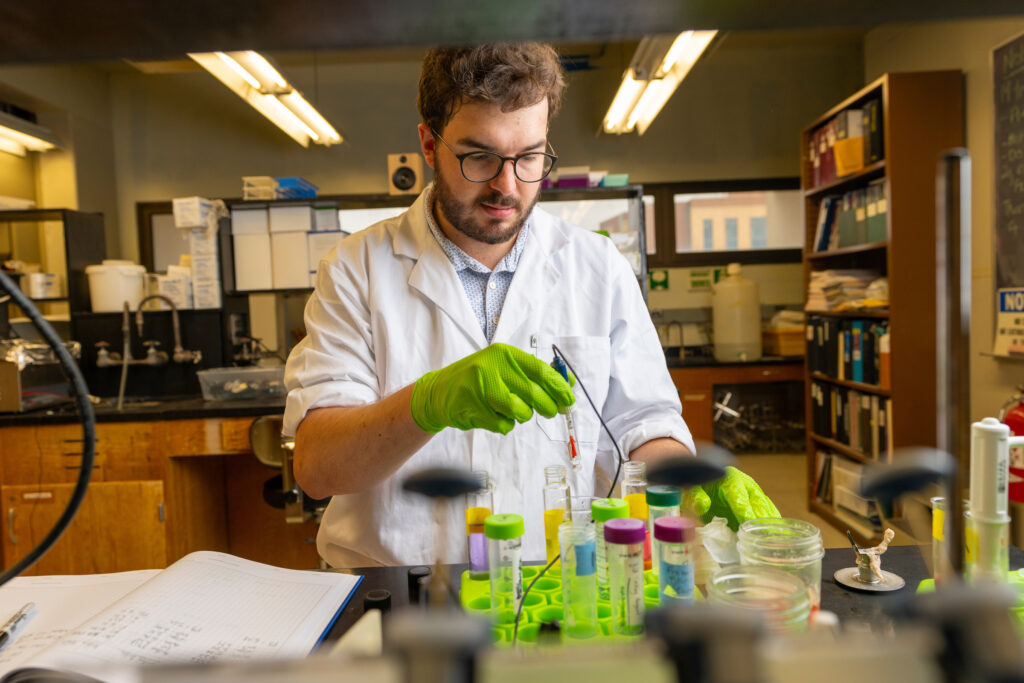
Augustus Harrison tests the pH of meat samples in Kleberg on Wednesday, Feb 15, 2023 in College Station, Texas. (Michael Miller/Texas A&M AgriLife Marketing and Communications)

Spanning the academic year, the Undergraduate Research Scholars Program encompasses research projects that begin in Fall 2026 and conclude in Spring 2027, culminating in a showcase of scholars’ work through both poster and oral presentations at a research symposium.

To ensure the success of these research experiences, the program provides professional development activities, including how to connect with a faculty mentor, proposal preparation, abstract writing, and presentation preparation, guiding students through the critical stages of their research experiences.

Upon successful completion of the program, each scholar is awarded a $1,000 scholarship as a recognition of their dedication and hard work. Additionally, faculty mentors, who play a crucial role in guiding and supporting the scholars throughout their research journey, are eligible to receive up to $500.

This funding is intended to cover various costs associated with the research, including materials, travel, or other necessary expenditures, ensuring that both scholars and mentors have the resources they need to achieve excellence in their research endeavors.

Please note: this program is for students in the College of Agriculture and Life Sciences. Students interested in the Texas A&M program may find more information on the website of Texas A&M University’s Office of Undergraduate Research

2026-2027 COALS Undergraduate Research Scholars cohort

Proposal TitleStudentMajorFaculty MemberFaculty Dept
Bioenvironmental ScienceJungie ZhangBCBP
Bioenvironmental ScienceSCSC
NutritionShaodong GuoNUTR
Forensic and Investigative ScienceYoujun Deng SCSC
Food Science and TechnologySeockmo KuFSTC
EntomologyRaul MedinaENTO
Ecology and Conservation Biology
Horticulture
Jacquelyn GraceECCB
Animal ScienceClare GillANSC
Ecology and Conservation BiologyDaniel SpalinkECCB
BiochemistryPaul StraightBCBP
Plant and Environmental Soil Science
Horticulture
Andrej SvyantekHORT
Dimitris KalafatisBiochemistryVishal GohilBCBP
BiochemistryJosh WandBCBP
Plant and Environmental Soil ScienceFelipe AburtoSCSC
HorticultureHisashi KoiwaHORT
Ecology & Conservation BiologyDaniel SpalinkECCB
Animal ScienceSummer Felton OdomALEC
Animal ScienceJason GillANSC
HorticultureAmit DhingraHORT
Rangeland, Wildlife, and Fisheries ManagementBeth SilvyRWFM
Fotoula StroumposGeneticsVishal GohilBCBP
Agricultural Leadership and DevelopmentSummer Felton OdomALEC
Plant and Environmental Soil ScienceSeth Murray &
Joshua Peeples
SCSC
Nutrition Masako Suzuki NUTR
Agricultural EconomicsRonald CroweAGEC
Rangeland, Wildlife, and Fisheries ManagementBeth Silvy RWFS

For more information, contact Dr. Craig Coates.

Program Timeline

June 1, 2026

Applications Open

Program applications are open for undergraduate students.

June 8, 2026

Online Information Session

Students are invited to learn about the program and whether it will be a good fit for their learning goals.

June 9, 2026

Online Information Session

Students are invited to learn about the program and whether it will be a good fit for their learning goals.

Applications will be sent out after this session

July 1, 2026

Online Proposal Writing Workshop

Learn how to write an effective proposal for your potential research subject.

July 2, 2026

Online Proposal Writing Workshop

Learn how to write an effective proposal for your potential research subject.

August 3, 2026

Applications Close

No applications will be accepted after this date.

Early August, 2026

Notifications

Selected faculty and students are notified.

August 24, 2026

Research Begins

Research is conducted, and faculty support is provided. Research occurs from August 24, 2026, through April 2027.

September 2026

Library and research skills workshop

Time TBD

October 2026

Presentation about available programming for URS students

Time TBD

March 2027

Abstract Writing Workshop

Time TBD

April 2027

Abstract Submissions Due

2026-2027 Cohort

Early April 2027

Poster Presentation Workshop

3:30 – 5:00 pm

April 22, 2027

Deadline to Submit Poster Design

2026-2027 Cohort

Late April/Early May 2027

Symposium

9:00 – 11:00 AM; BICH Foyer/Rm 107

May 2027

2027-2028 Applications Open

2027-2028 Cohort

August 2027

Applications Due

2027-2028 Cohort

Eligibility

Student Eligibility:

  • Undergraduate student with a primary major in any of the 15 departments within the College of Agriculture and Life Sciences
  • Sophomore or Junior with an expected graduation date between May 2027 and Summer 2028
  • Completed online Responsible Conduct of Research (RCR) Training
  • Submitted research proposal, collaboratively developed with and approved by the research faculty mentor, by August 4, 2026
  • Will be registered in the future for Fall 2026 and Spring 2026 XXXX-491 research credits
  • Must commit to attending mandatory URS student development events

Faculty Mentor Eligibility:

  • Primary faculty appointment is in one of the 15 departments within the College of Agriculture and Life Sciences
  • Faculty have a XXXX-491 Research Section
  • T/TT, APT, and AgriLife Faculty are all eligible to serve as research faculty mentors
  • Collaboratively develop and approve the student’s research proposal, XXXX-491 credits and the student’s weekly time commitment

Submit Your Application Materials in InfoReady

  • Student Name, UIN, primary major, expected graduation date
  • Expected number of Fall 2026 XXXX-491 research credits
  • Weekly time commitment for each semester (minimum of 3+ hours/week for 0-1 credits, 3+ hours for each additional credit hour)
  • Responsible Conduct of Research (RCR) completion certificate
  • Commitment to attend mandatory URS events
  • 2-page proposal including an introduction, specific aims, methodology, expected results, potential pitfalls, and alternative approaches
  • Faculty research mentor approval of the proposal, research credits, and weekly time commitment

Support Provided to the Student Research Scholar:

2026-2027 Cohort

  • Library and research skills workshop – September 2026
  • Presentation on available research programming for undergraduate research scholars, October 2026
  • Abstract Writing Workshop – March 2027
  • Poster presentation workshop – April 2027
  • Feedback from judges following the research symposium
  • Awards for the best posters and oral presentations

Summer Preparations for 2026-2027 Cohort

  • Recorded URS Program Information session from June 8, 2026 (password ^PKP%c16)
    • Zoom
  • Proposal Preparation Writing Workshop (mandatory attendance for at least one session)
    • July 1 or July 2, 2026, 3:30 pm
    • Registration link will be sent out to interested students after June 9, 2026
  • Proposal Writing Worksheet

Program Resources

  • Orientation Recording and Transcript –
    • Zoom Link (Email us at [email protected])
    • Passcode: wDj$2xQ1
  • Library Resources recording
    • https://tamu.zoom.us/rec/share/IaQ1dlDBrOeEI6PbLrenhxUIAFUwKLMa477zI9yAbgA0xUtCPoq8I1_831L7YKyr.llNbjxIAM06mmmFt (Access Password: #6i??ff.)
  • Undergraduate Research recording
  • Proposal Writing Guide
  • Responsible Conduct of Research (RCR)

Other Resources

  • Team-based projects through the Aggie Research Program
    • Project List
  • Undergraduate Research Ambassadors
  • Office of Undergraduate Research — Connect with us — we can help! Email [email protected].
  • Thesis Program
  • Undergraduate Scholarship Journal

2025-2026 Undergraduate Research Scholars

Proposal TitleStudentMajorFaculty MemberFaculty Dept
Structural Visualization of Programmed Ribosomal Frameshifting in Bacteriophage-Infected BacteriaKhalid AbdelhamidBioenvironmental ScienceJungie ZhangBCBP
Environmental Reservoirs of Antibiotic Resistance: A Molecular Surveillance Study in Agricultural WatershedsHajar BennisBioenvironmental ScienceTerry J. GentrySCSC
Aging-induced CD8 T cell dysfunction impairs hepatic insulin resistanceOhm BrahmbhattNutritionShaodong GuoNUTR
Sensitivity, Accuracy, and Integration of Handheld XRF, FTIR, and Raman for Forensic Soil AnalysisArwen ChenForensic and Investigative ScienceYoujun Deng SCSC
Development of Texas-style kimchi using regional produce and assessment of microbiome dynamicsJusty ChungFood Science and TechnologySeockmo KuFSTC
Tawny Crazy Ant attraction to Sorghum Aphid honeydewBrayden ClarkEntomologyRaul MedinaENTO
Seasonal Changes in Blood Parameters between Migrant and Resident SpeciesJulia HickmanEcology and Conservation Biology
Horticulture
Jacquelyn GraceECCB
Look into RXFP2 as a Causative Variant in Regards to Presence and Size of Scurs in the McGregor PopulationTess HomeyerAnimal ScienceClare GillANSC
Environmental DNA detection of an endangered mossLuis HurtadoEcology and Conservation BiologyDaniel SpalinkECCB
The Role of frl operon Regulating Sliding Motility in Bacillus subtilisSarah IngramBiochemistryPaul StraightBCBP
Improving Germination Efficiency in Southern-U.S. Adapted Vitis Germplasm via Gibberellic Acid and Stratification TimingBrooke IsbellPlant and Environmental Soil Science
Horticulture
Andrej SvyantekHORT
Functionalizing Mitochondrial Proteome Through Machine Learning Approaches‬Dimitris KalafatisBiochemistryVishal GohilBCBP
Expression, Purification, and Refolding of BCL-XL for NMR AnalysisJayden KotiBiochemistryJosh WandBCBP
Tracking Soil Change in Urban Environments in Houston via Soil Archives and MIR SpectroscopyDaniel KwongPlant and Environmental Soil ScienceFelipe AburtoSCSC
Identifying protein sequence for ER-targeting of melon HPL13.Caleb LehnertzHorticultureHisashi KoiwaHORT
Comparative Analysis of Fungal Endophyte Communities in Herbarium and Fresh Leaf TissueKai MillerEcology & Conservation BiologyDaniel SpalinkECCB
Improving Disaster Relief Communication for Livestock Producers in TexasTracer RiceAnimal ScienceSummer Felton OdomALEC
Characterization of broad host range Burkholderia phage Bcep44681 and antimicrobial agent BceT44681Allyson SokolowskiAnimal ScienceJason GillANSC
Genomic Characterization and Transformation of Munson Grape Cultivars for Disease ResistanceAidan SouderHorticultureAmit DhingraHORT
Reassessing Pond Management Practices in Texas: A Contemporary Survey of Private Pond OwnersDavis StairsRangeland, Wildlife, and Fisheries ManagementBeth SilvyRWFM
Copper chelator PSP-2 expands the therapeutic index of elesclomolFotoula StroumposGeneticsVishal GohilBCBP
Leadership Faculty and Students’ Perceptions of AI in the Classroom: A Pilot StudyJolee SzafranAgricultural Leadership and DevelopmentSummer Felton OdomALEC
Leveraging Artificial Intelligence for Improved Sorghum Identification and Phenotypic Feature ExtractionChloe TilleyPlant and Environmental Soil ScienceSeth Murray &
Joshua Peeples
SCSC
Investigating the existence of circadian rhythms in circulating and storage levels of retinoids in miceRobert WagnerNutrition Masako Suzuki NUTR
Assessing the Financial Risk of Agricultural Cooperatives in TexasAn WangAgricultural EconomicsRonald CroweAGEC
Reassessing Pond Management Practices in Texas: A Contemporary Survey of Private Pond OwnersBridger WilsonRangeland, Wildlife, and Fisheries ManagementBeth Silvy RWFS

2024-2025 Undergraduate Research Scholars

Proposal TitleStudentMajorFaculty MemberFaculty Dept
A Study of Relationships Among Artificial Intelligence Service Quality, Customer Satisfaction on Customer EngagementAnnemarie WilliamsHMGTDr. Po-Ju ChenHMGT
Applications of in vitro Pollen Tube Germination Assays in CottonMacie PowellSCSCDr. David StellySCSC
Character Development through Sport: Examining Differences in “fair play” in a Youth Tournament in MexicoAlberto EspinozaRPTSDrs. Andrea Ettekal
and Chad Nelson
ALEC
Cognitive Effects of XylitolAvery DeanNUTRDr. Karen BeathardNUTR
Cognitive Effects of XylitolAnna TillinghastNUTR (HHT)Dr. Karen BeathardNUTR
Environmental DNA Detection of an Endangered MossLuis HurtadoECCBDr. Daniel SpalinkECCB
Establishment of Bovine Upper Airway 3D Organoid Model for Studying MechanismOlivia TrevinoPOSCDr. Yuhua FarnellPOSC
How the Knowledge of Food Science and Nutrition Systems Effects the Nutritional Habits of StudentsMorgan MarburgerAGCJDr. Robert StrongALEC
Identification of De Novo Genes with Different Evolutionary Ages in A. Thaliana through Comparative Genomic AnalysesNicole RosenfeldGENEDr. Claudio CasolaECCB
Impact of Microbiome-Based Short Chain Fatty Acids on Mouse Colonic Organoid Growth and Gene ExpressionJennie KimNUTRDr. Robert ChapkinNUTR
Isolation and Identification of Non-Toxic Monascus Strains for Safer Industrial ApplicationsKhadija AyeshaFSTCDr. Seockmo KuFSTC
Let’s Welcome Artificial Intelligence, the New Boss of the Hospitality IndustryKimberly LongHMGTDr. Robert Huy GipHMGT
Mercury Levels of Nonmigratory Passerines – Potential Local Contamination SourcesHannah BretthorstECCB – Vertebrate ZoologyDr. Jacquelyn GraceECCB
Optimizing Extraction Methods for Monascus Red PigmentIan KonvickaFSTCDr. Seockmo KuFSTC
Overexpressing Melon CYP74 in Arabidopsis Thaliana and Transiently Transformed Melon to Characterize Subcellar Localizations of CYP74 and Volatile Profiles of Transformed PlantsAidan SouderHORTDr. Hisashi KoiwaHORT
Role of Microbiome-Host Interaction in the Intersection of Metabolic Syndrome and Organophosphate Flame Retardant ExposureEmma ThomasNUTRDr. Jenny WuNUTR
The Behavioral Effects of Nosema Ceranae on Apis Mellifera QueensTara LanningENTODr. Juliana RangelENTO
The Effect of Dietary Carbohydrate Composition on Cognitive PerformanceRyan ArenzNUTRDr. Karen BeathardNUTR
The Impact of Meal Timing on PCOS Risk During AdolescenceEllie GoenNUTRDr. Heidi Vanden BrinkNUTR
The Impact of Metal Pollutants on Amphibian Occupancy of Lentic SystemsPrineet AnandBESCDr. Lee FitzgeraldECCB
The Impact of Selection and Drift on De Novo Gene Evolution and RetentionCatherine ChaisonGENEDr. Claudio CasolaECCB
The Influence of a Field-Based Learning Curriculum on Attitudes and Behaviors of Natural Resources Management College Students and Recent GraduatesCaitlin CastroRWFMDr. Beth SilvyRWFM
The Influence of Sleep Quality on Polycystic Ovary Syndrome Risk During AdolescenceSavli PatelNUTRDr. Heidi Vanden BrinkNUTR
Investigating Perceptions of Cannabis Among Young-Adult Users and How Product Packaging and Labeling Can Influence Consumer BehaviorMaci GuayAGCJDrs. Holli Leggette and Benjamin MontemayorALEC; HLTH
Using 3D Renders of Keel Bones to Analyze Keel Bone FracturesCody PoolePOSCDr. Morgan FarnellPOSC

Faculty Contacts

Dr. FirstName LastName

[Department]
[email protected]
123 AGLS
(xxx) xxx-xxxx

Dr. FirstName LastName

[Department]
[email protected]
123 AGLS
(xxx) xxx-xxxx

Dr. FirstName LastName

[Department]
[email protected]
123 AGLS
(xxx) xxx-xxxx

Dr. FirstName LastName

[Department]
[email protected]
123 AGLS
(xxx) xxx-xxxx

Questions?

Dr. Craig Coates
Associate Dean for Programmatic Success
979-321-5780
[email protected]

A member of
Texas A&M AgriLife

Texas A&M AgriLife Extension Service | Texas A&M AgriLife Research | Texas A&M Forest Service | Texas A&M Veterinary Medical Diagnostic Lab | College of Agriculture & Life Sciences

Looking for More Information?

  • Apply Now
  • Maps & Directions
  • AgriLife Intranet
  • Request Information
  • Departments
  • Schedule a Visit
  • Faculty Affairs
  • Texas A&M Foundation
  • Jobs at TAMU
600 John Kimbrough Blvd, 2402 TAMU, College Station, TX 77843-2402
979-845-3712Contact Us
Texas A&M University

© 2026 Texas A&M University. All rights reserved.

  • Compact with Texans
  • Privacy and Security
  • Accessibility Policy
  • State Link Policy
  • Statewide Search
  • Veterans Benefits
  • Military Families
  • Risk, Fraud & Misconduct Hotline
  • Texas Homeland Security
  • Texas Veterans Portal
  • Equal Opportunity
  • Open Records/Public Information